
Health Canada PRCI
Public Release of Clinical Information: anonymized clinical documents, published — with a process and timeline sponsors have to be ready for.
Last verified October 2026 against primary sources.
At a glance
- Authority
- Health Canada; final packages published on the clinical information portal (clinical-information.canada.ca) — open access, no login
- Legal basis
- Food and Drug Regulations C.08.009.1–C.08.009.3 (SOR/2019-62, registered March 4, 2019); Medical Devices Regulations ss. 43.11–43.13
- Applies to
- NDS, SNDS, ANDS, SANDS, EUNDS, SEUNDS; Class III and IV medical device applications and amendments (Class I/II out of scope); since December 2025, Health Canada publishes Class IV information proactively and Class III on request
- Trigger
- Final regulatory decision — positive (e.g., Notice of Compliance) or negative; Health Canada emails the manufacturer an initiation notice
- Deadlines
- Sponsor’s annotated documents, redaction control sheet, and anonymization report due 60 calendar days from initiation; publication targeted at 120 calendar days
- Anonymization standard
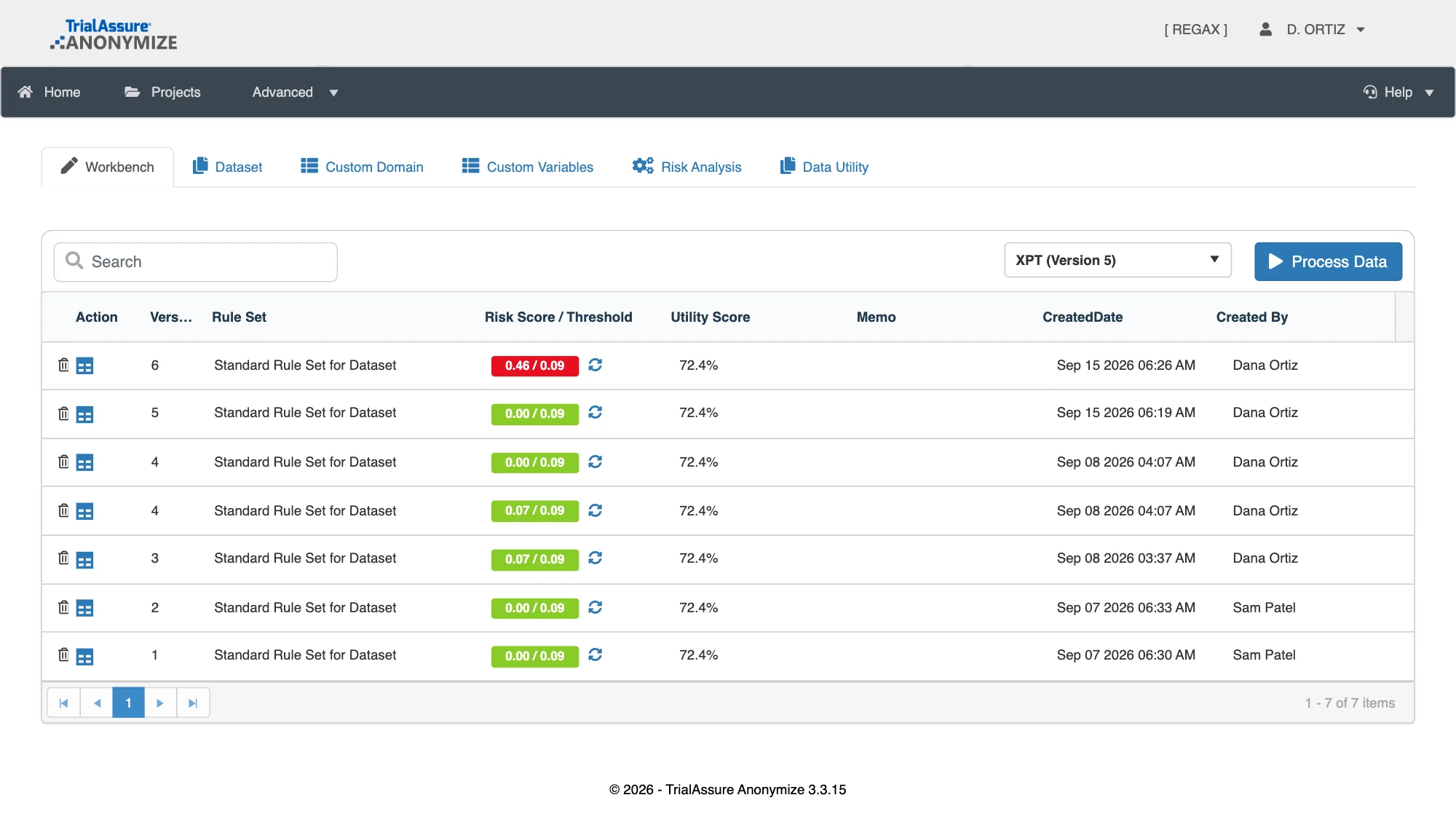
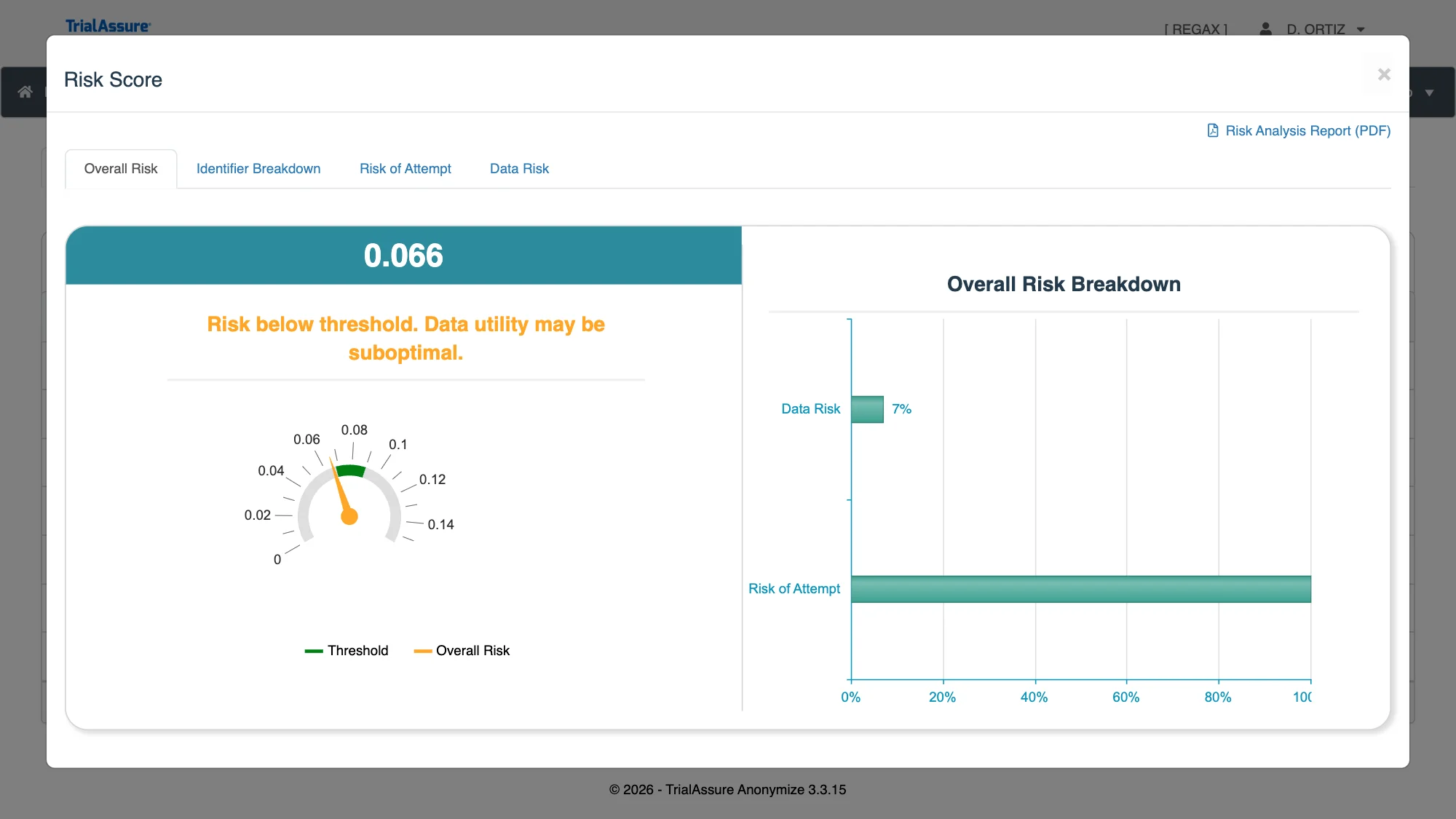
- Risk-based; Health Canada encourages a 9% (0.09) re-identification risk threshold — equivalent to a cell size of 11 patients
- Enforcement
- No fine schedule; Health Canada retains final decision on what is published and rejects redactions and data transformations that lack adequate justification
- Status & key dates
- Fully in effect: proactive publication of drug submissions since 2019 and devices since 2021 (phased in over 4 years; Class IV only since December 2025, with Class III on request); past submissions available on request since March 20, 2019
Who this is for
The person assembling a public release.
PRCI asks for anonymized documents and the reasoning behind them. Producing both together is the difference between a release and a rework.
Deadlines that matter
| Event | Deadline | Notes |
|---|---|---|
| Process Initiation Meeting (PIM) request — optional, recommended for first-time sponsors | Window opens 120 calendar days before the final regulatory decision and closes 20 calendar days after it | One-on-one consult with Health Canada on in-scope documents and process requirements before the clock starts. |
| Process initiation (positive decision) | Day 0 — issuance of the final regulatory decision | Initiation triggers an email notification; sponsors may begin preparing documents before the notice arrives. |
| Process initiation (negative drug decision) | 31 calendar days after the date of the non-compliance notice | Deferred if a Letter of Intent for Reconsideration is filed; reconsideration takes 70–140 calendar days depending on internal vs external review. |
| Sponsor package due | Day 60 — 60 calendar days from initiation | Annotated documents with readable proposed redactions, a Proposed Redaction Control Sheet (.CSV, guidance Appendix E), and an anonymization report (Appendix F). |
| Rebuttal of rejected redactions | One additional justification round: Health Canada returns its assessment around day 90, and sponsors have about 15 days to respond | After that round, Health Canada retains final decision on what is publicly released. |
| Publication on the portal | Day 120 — Health Canada aims to publish 120 calendar days from initiation | Final documents are watermarked and released under non-commercial Terms of Use on clinical-information.canada.ca. |
Regulatory guidance changes. Deadlines and requirements shown here are a summary, not legal advice — confirm them against the current text published by the relevant authority before you rely on them for a submission.
The compliance workflow
-
Map exposure before the decision issues.
Inventory every in-scope document — eCTD Modules 2.5, 2.7, 5.3 and CSR appendices 16.1.1, 16.1.2, 16.1.9 — while the submission is still under review. First time through, consider a PIM to clarify the documents in scope and Health Canada’s requirements before the publication process begins.
-
Anonymize on a quantified risk basis.
Apply risk-based anonymization against Health Canada’s encouraged 9% (0.09) re-identification threshold, transforming only the variables that actually drive risk. Document the methodology, threshold, and residual-risk evidence in the anonymization report — Health Canada reviews it and rejects unjustified transformations.
-
Build the CBI case narrowly.
Only two categories stay protected: information that did not support the proposed conditions of use, and tests, methods, or assays used exclusively by the manufacturer. Justify each proposed redaction line-by-line in the .CSV control sheet, keeping proposed redactions readable in the annotated draft.
-
Reuse EMA Policy 0070 work where it exists.
If the same clinical information was already published by EMA, submit the previously redacted information with the required certification letter under Appendix G, and redact only the components EMA never saw.
-
Hit day 60, then finalize for day 120.
Submit the package via CESG within 60 calendar days of initiation. After Health Canada’s review, convert accepted redactions to non-readable text labeled as CBI or personal information, apply the Appendix D naming conventions, and submit finals ahead of the 120-day publication target.
Health Canada PRCI vs EMA Policy 0070
The same comparison as on the Policy 0070 page, seen from the Canadian side — differences only. The PRCI requirement itself is in At a glance above.
| Dimension | Health Canada PRCI | EMA Policy 0070 |
|---|---|---|
| Legal instrument | Binding regulation: Food and Drug Regulations C.08.009.1–C.08.009.3 (SOR/2019-62) and Medical Devices Regulations ss. 43.11–43.13, in force since March 2019. | Agency policy: Policy/0070, adopted 2 October 2014, effective 1 January 2015 — suspended in December 2018 and relaunched from September 2023. |
| Scope | Drug submissions (NDS, SNDS, ANDS, SANDS, EUNDS, SEUNDS) plus Class III and IV medical device applications — a broader universe that includes devices, with Class IV published proactively and Class III on request since December 2025. Past submissions available on request. | Centrally authorized human medicines only. Step 1 (from September 2023) new active substances; Step 2 (MAAs submitted from April 2025) all new initial MAAs, line extensions and major clinical Type II variations. |
| Trigger and publication clock | Final regulatory decision, positive or negative — negative drug decisions initiate 31 days after the notice. Sponsor package due at day 60; Health Canada aims to publish by day 120. | CHMP opinion, or withdrawal before the opinion. Redaction proposal due up to 30 days after the opinion (60 days after a withdrawal); EMA aims to publish within 120 days of the CHMP opinion (150 days after a withdrawal). |
| What is published, and where | Modules 2.5, 2.7 and 5.3 plus appendices 16.1.1, 16.1.2 and 16.1.9 — on an open portal, no login, watermarked for non-commercial use. | Clinical overview, clinical summaries and CSRs with the protocol, sample CRF and statistical-methods appendices — on clinicaldata.ema.europa.eu, which requires a login. |
| Confidential-information test | A narrower test: Health Canada protects information not used to support the proposed conditions of use, and retains the final decision on what is published. | Every CCI claim is justified line by line in EMA’s justification table, and EMA assesses each one against its own guidance. |
| Reuse between regulators | Accepts EMA-accepted redacted documents with a certification of identical content (guidance Appendix G). | Acts as the source package: redaction conventions from an EMA final are also permissible in a Health Canada submission. Since April 2026, EMA and Health Canada offer a joint review for applications filed with both, so one review can cover both packages. |
Where they agree Both use risk-based anonymization approaches that consider re-identification risk, both require the sponsor’s anonymization report alongside the documents, and neither carries a standalone fine — in each case the obligation runs inside the approval process itself.
Self-assessment
How ready are you for Health Canada PRCI?
Eight questions, two minutes, no form until the end. You get a readiness score by area and the three things to fix first. Email is only asked for if you want the full breakdown sent to you.
Want the full breakdown?
We’ll email your area-by-area scores with the specific Health Canada PRCI rules behind each question, and what a fix looks like at your scale. Work email, no newsletter unless you ask.
Regulatory guidance changes. Deadlines and requirements shown here are a summary, not legal advice — confirm them against the current text published by the relevant authority before you rely on them for a submission.
Last reviewed: October 1, 2026
What is Health Canada PRCI?
Health Canada’s Public Release of Clinical Information (PRCI) proactively publishes anonymized clinical documents from drug submissions and medical device applications after a final regulatory decision. In force since February 28, 2019 under Food and Drug Regulations C.08.009.1–C.08.009.3 and Medical Devices Regulations ss. 43.11–43.13, the process targets publication within 120 calendar days of process initiation, with the sponsor’s redaction and anonymization package requested within 60 calendar days.
What PRCI requires
Health Canada’s Public Release of Clinical Information initiative proactively publishes clinical information from drug submissions and medical device applications. Sponsors must prepare packages where personal information is anonymized and confidential business information is justified — on Health Canada’s process timeline, with the anonymization methodology documented.
What that means operationally
- Anonymization at submission scale, to a regulator that reviews methodology.
- CBI proposals that hold up.
- A process clock that starts whether or not your team has capacity that quarter.
How the platform answers it
ANONYMIZE was built for exactly this class of work: risk-based anonymization with quantified residual risk and generated documentation. It prepares the annotated documents with readable proposed redactions, the Proposed Redaction Control Sheet that justifies each CBI claim, and the evidence behind your anonymization report. LINK AI accelerates the report drafting itself. The day-60 and day-120 clocks are tracked alongside everything else you owe. Where EMA has already published the same clinical information, your Policy 0070 package carries over with an Appendix G certification. Run it in-house, with our PRCI-experienced specialists, or hand us the package.
Health Canada PRCI — frequently asked questions
Who handles Health Canada PRCI anonymization?
Three routes, and you can mix them: license TrialAssure ANONYMIZE® and run PRCI packages in-house, run it alongside TrialAssure® specialists, or hand us the submission as a fully outsourced package. Every route produces the deliverables Health Canada expects — annotated documents with readable proposed redactions, the Proposed Redaction Control Sheet (guidance Appendix E), and the anonymization report (Appendix F) recording methodology, threshold and residual risk. Accountability stays with the sponsor whichever you choose: Health Canada corresponds with the manufacturer and holds the final decision on what is published. Our specialists are PRCI-experienced — see services for how the models differ.
Is PRCI the same as EMA Policy 0070?
Same family, different regulator and process. PRCI is binding regulation — Food and Drug Regulations C.08.009.1–C.08.009.3 for drugs and Medical Devices Regulations ss. 43.11–43.13 for Class III and IV device applications, both in force since March 2019 — triggered by a final regulatory decision that can be positive or negative. EMA Policy 0070 is agency policy, centrally authorized medicines only, no devices, and its output sits behind a login while Health Canada’s portal is open access. The anonymization thinking is shared: both are risk-based with a documented report, and Health Canada’s encouraged 9% (0.09) threshold aligns with the threshold cited in EMA’s Policy 0070 External Guidance. The platform maps to both and tracks them side by side.
What’s the anonymization standard PRCI expects?
Quantified, risk-based anonymization of personal information, with the approach documented for Health Canada’s review. There is no fixed redaction list: you measure re-identification risk in context and transform only the variables that actually drive it, so the published documents stay analytically useful. Health Canada encourages a 9% (0.09) re-identification risk threshold — equivalent to a cell size of 11 patients — and expects an anonymization report (guidance Appendix F) setting out the method, the threshold applied and the residual-risk evidence. Blanket blacking-out and transformations without adequate justification get rejected, so the report carries as much weight as the redactions themselves.
Does Health Canada PRCI apply to medical devices?
Yes — PRCI applies to Class III and Class IV medical device licence applications and amendments; Class I and II devices are out of scope. The legal basis is Medical Devices Regulations sections 43.11–43.13, which mirror the drug provisions. Health Canada began proactive publication for devices in 2021; since December 2025, it publishes Class IV information proactively and Class III on request. Clinical information from past device applications has been available on request since March 20, 2019. Device manufacturers follow the same 120-day process, including anonymization and CBI justification.
How long does the Health Canada PRCI process take?
120 calendar days from initiation to publication, per Health Canada’s PRCI guidance. Initiation is the final regulatory decision; the sponsor’s package — annotated documents, redaction control sheet, and anonymization report — is due 60 calendar days later. That 60-day window is the pinch point: anonymizing a full submission’s clinical study reports to a quantified 0.09 risk threshold is heavy work on a fixed clock, which is why sponsors run it through purpose-built software like TrialAssure ANONYMIZE or start preparation before the decision issues.
What happens if Health Canada rejects a sponsor’s proposed redactions?
The sponsor gets exactly one additional opportunity to justify the redaction, and Health Canada retains final decision on what is published. The guidance lists the rejection grounds: the information supported the proposed conditions of use, the test or assay is not used exclusively by the manufacturer, the content was not shown to be out of scope, or it is already in the public domain. Data transformations lacking adequate justification are also rejected — every anonymization decision needs documented, quantified reasoning.
Which documents does Health Canada publish under PRCI?
eCTD Modules 2.5 (clinical overviews), 2.7 (clinical summaries), and 5.3 (clinical study reports), plus three CSR appendices: 16.1.1 (protocol and amendments), 16.1.2 (sample case report forms), and 16.1.9 (statistical analysis plan). Individual patient listings and completed case report forms are out of scope and are not published. Final packages appear on Health Canada’s clinical information portal with a watermark and non-commercial Terms of Use — open access, unlike EMA’s login-gated clinical data website.
Can sponsors reuse EMA Policy 0070 redactions for Health Canada PRCI?
Yes. Health Canada’s guidance provides an alternative pathway: if the clinical information was already published under EMA Policy 0070, the sponsor may resubmit the EMA-accepted redacted documents with a certification (guidance Appendix G) attesting the content is identical. Where only part of the Canadian package went through EMA, sponsors redact just the outstanding components. Teams managing both jurisdictions typically track the paired obligations in TrialAssure so the certification pathway is identified at planning, not after day 60.
Who can request clinical information from past submissions?
Anyone. Since March 20, 2019, members of the public can request clinical information from drug submissions and device applications that received a final decision before the regulations came into force, using an electronic form on Health Canada’s clinical information portal. The request identifies the product, manufacturer, indication, and documents sought. A granted request starts the same process for the sponsor — anonymization and CBI justification on Health Canada’s timeline — so long-approved products remain a live PRCI exposure.
Put specialists on your day-60 PRCI package
Tell us the shape of the work: how many submissions or device applications, roughly how many CSRs and appendices, and when the final decision is expected. We come back with who would run the anonymization, what the annotated documents, redaction control sheet, and anonymization report take at a 0.09 threshold, and how fast we can start against day 60. A privacy specialist replies within one business day.



Get your PRCI package ready.
Trusted by 8 of the top 10 clinical development companies